
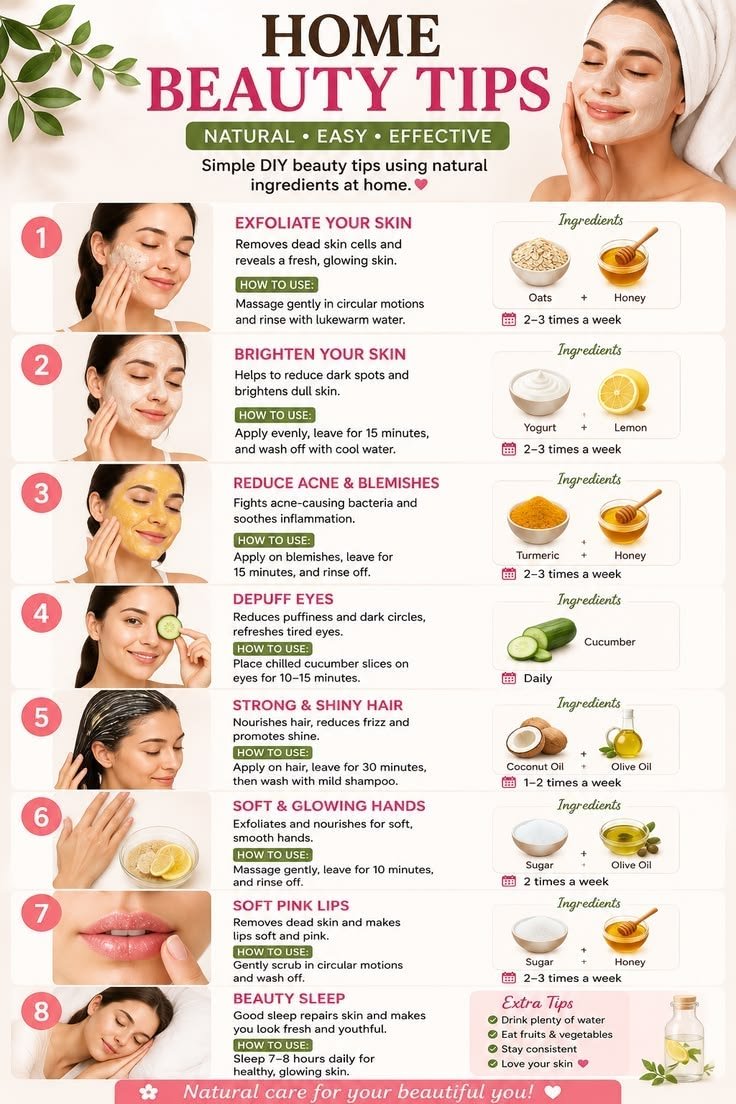
Finding reliable beauty advice can be difficult. Social media is full of skincare routines, makeup tips, hair-care recommendations, and viral beauty products, but not every piece of advice is suitable for everyone.
Good beauty advice starts with understanding your individual needs and building simple habits that you can maintain.
1. Understand Your Skin
One of the most important pieces of beauty advice is to understand your skin before choosing skincare products.
Skin can differ in oiliness, dryness, sensitivity, and other characteristics. A product that works well for one person may not produce the same experience for someone else.
Start with a simple routine and introduce new products gradually.
2. Keep Your Skincare Routine Simple
You don’t need a shelf full of products to have a skincare routine.
A basic routine can include cleansing, moisturizing, and daytime sun protection.
Additional products can be considered depending on your specific needs and the instructions provided by the manufacturer.
3. Protect Your Skin From the Sun
Sun protection is an important part of everyday skincare.
Broad-spectrum sunscreen can help protect exposed skin from ultraviolet radiation. Follow the product’s directions and reapply when recommended.
Don’t rely on sunscreen alone: shade, clothing, and other sun-protection measures can also be useful.
4. Don’t Follow Every Viral Trend
A beauty trend becoming popular online doesn’t automatically mean that it is appropriate for everyone.
Before trying a viral skincare or beauty hack, research the technique and understand its potential risks.
Be especially cautious with DIY treatments or products that are not designed for use on the skin.
5. Choose Products Based on Your Needs
Instead of asking, “What’s the most popular beauty product?”, ask, “What do I actually need?”
Consider your skin or hair type, your goals, your budget, and how often you will realistically use the product.
6. Read the Instructions
Beauty products are designed to be used in specific ways.
Pay attention to the recommended amount, frequency, storage instructions, warnings, and other information on the packaging.
Using more product than recommended does not necessarily produce better results.
7. Introduce New Products Gradually
Changing your entire beauty routine at once can make it difficult to identify which product is responsible for an unwanted reaction.
When possible, introduce products one at a time and give yourself an opportunity to see how your skin or hair responds.
8. Take Care of Your Hair
Good hair care starts with understanding your hair and scalp.
Choose products that suit your hair type, avoid unnecessary heat, and follow the instructions for treatments and styling products.
If you have persistent scalp or hair concerns, consider speaking with a qualified healthcare professional.
9. Keep Your Beauty Tools Clean
Regularly clean makeup brushes, sponges, hairbrushes, and other reusable tools.
Keeping your tools clean is an important part of maintaining good beauty hygiene.
10. Don’t Confuse Expensive With Effective
A high price doesn’t guarantee that a beauty product will be right for you.
Compare products based on their purpose, ingredients, formulation, and suitability rather than price alone.
11. Be Careful With Beauty Claims
Beauty advertising can use impressive language to attract attention.
Claims such as “instant results,” “miracle,” or “guaranteed transformation” should be approached carefully.
Look for clear product information and reliable evidence when evaluating strong claims.
12. Take Care of Yourself
Beauty is also connected to general well-being.
Getting enough sleep, staying hydrated, eating a balanced diet, managing stress, and staying physically active can all support overall health.
These habits aren’t instant beauty fixes, but they are important parts of a healthy lifestyle.
When Should You Seek Professional Advice?
Some beauty concerns may actually be health or medical concerns.
If you have persistent skin irritation, unusual changes, significant hair loss, or another concern that doesn’t improve, a qualified healthcare professional or dermatologist can help determine what is happening.
Final Thoughts
The best beauty advice isn’t necessarily about buying more products.
Focus on understanding your skin and hair, protecting your skin from the sun, using products correctly, keeping your routine simple, and being careful with information you see online.
A beauty routine should support your lifestyle—not make it more complicated.