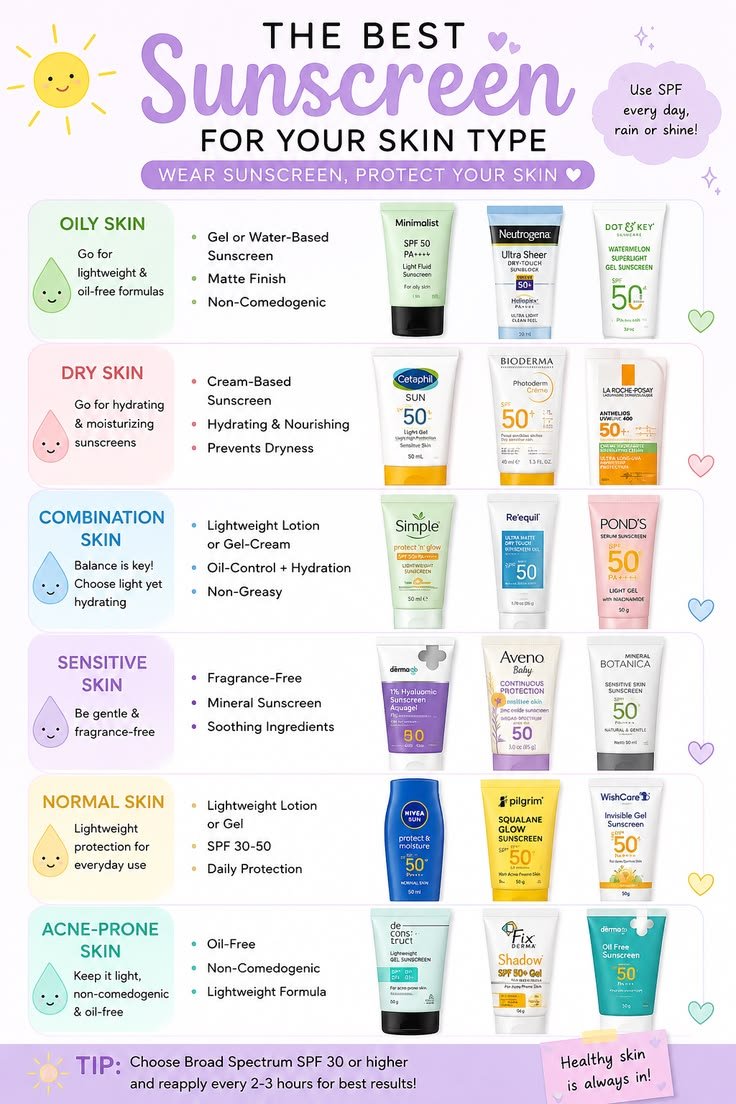
Sunscreen is an important part of a daily skincare routine. It helps protect the skin from ultraviolet (UV) radiation from the sun and can help reduce sunburn and long-term sun-related skin damage.
With many different sunscreen formulas available, choosing the right one can sometimes be confusing. This guide explains how sunscreen works, what SPF means, how to choose a product, and how to use it correctly.
What Is Sunscreen?
Sunscreen is a skincare product designed to protect the skin from UV radiation.
Depending on the formula, sunscreen can contain filters that absorb, reflect, or scatter UV radiation before it reaches the skin.
Sunscreens are commonly available as:
- Creams
- Lotions
- Gels
- Sticks
- Sprays
- Lightweight fluids
The best format is often the one you can apply comfortably and consistently.
Why Is Sunscreen Important?
Regular sun protection can help:
- Reduce the risk of sunburn
- Protect against UV-related skin damage
- Reduce premature skin aging caused by UV exposure
- Help maintain an even-looking complexion
UV exposure can occur even when the weather isn’t particularly hot or sunny, so sun protection can be useful throughout the year.
What Does SPF Mean?
SPF stands for Sun Protection Factor.
It primarily indicates the level of protection a sunscreen provides against UVB radiation, which is strongly associated with sunburn.
Common SPF levels include:
- SPF 15
- SPF 30
- SPF 50
A higher SPF does not mean you can apply sunscreen less frequently. Correct application and reapplication remain important.
What Is Broad-Spectrum Sunscreen?
A broad-spectrum sunscreen is designed to provide protection against both UVA and UVB radiation.
UVA and UVB are different types of ultraviolet radiation, and both can affect the skin.
When choosing sunscreen, looking for broad-spectrum protection is an important consideration.
How to Choose the Right Sunscreen
For Dry Skin
A moisturizing sunscreen may feel more comfortable if your skin tends to feel dry.
Look for formulas containing moisturizing ingredients such as:
- Glycerin
- Ceramides
- Hyaluronic acid
For Oily Skin
A lightweight gel, fluid, or non-greasy formula may feel more comfortable.
Look for products described as:
- Lightweight
- Oil-free
- Non-comedogenic
For Sensitive Skin
If your skin is sensitive, you may prefer a simple, fragrance-free formula.
Mineral sunscreens containing zinc oxide or titanium dioxide can also be an option for people who find some chemical sunscreen formulas irritating.
How Much Sunscreen Should You Use?
One of the most common sunscreen mistakes is applying too little.
For the face and exposed areas, use enough product to provide the protection stated on the label. A commonly used practical guide is the two-finger method for the face and neck, although the exact amount depends on the product and the area being covered.
Don’t forget commonly missed areas such as:
- Ears
- Neck
- Hairline
- Hands
When Should You Apply Sunscreen?
Sunscreen should generally be the final step of your morning skincare routine.
A simple order is:
Cleanser → Serum → Moisturizer → Sunscreen
For outdoor activities, apply sunscreen before going outside according to the product’s directions.
How Often Should You Reapply Sunscreen?
Sunscreen can wear off through:
- Sweating
- Swimming
- Toweling
- Rubbing
- Extended outdoor activity
Reapply according to the product instructions, especially after swimming or heavy sweating.
If you spend a lot of time outdoors, regular reapplication is particularly important.
Sunscreen on Cloudy Days
UV radiation can still reach the Earth’s surface on cloudy days.
That means sunscreen can still be useful when the sky isn’t completely clear.
Other forms of sun protection can also help, including:
- Wearing protective clothing
- Seeking shade
- Wearing a hat
- Using sunglasses
Sunscreen and Makeup
Sunscreen should generally be applied before makeup.
A simple routine can be:
- Cleanse
- Apply skincare products
- Apply moisturizer if needed
- Apply sunscreen
- Apply makeup
Some makeup products contain SPF, but they may not provide enough protection on their own if too little product is applied.
Common Sunscreen Mistakes
Applying Too Little
Using an insufficient amount can reduce the protection you receive.
Forgetting Reapplication
Even a good sunscreen becomes less effective when it wears off.
Forgetting the Neck and Ears
These areas can receive significant sun exposure but are often overlooked.
Relying Only on Sunscreen
Sunscreen is only one part of sun protection. Shade, clothing, hats, and sunglasses can provide additional protection.
Sunscreen and Skincare
Sunscreen can work alongside a simple skincare routine.
A basic morning routine could be:
Cleanser → Moisturizer → Sunscreen
If you use a serum:
Cleanser → Serum → Moisturizer → Sunscreen
You don’t need a complicated routine to practice good sun protection.
Final Thoughts
Sunscreen is one of the simplest ways to protect your skin from UV exposure. Choosing a broad-spectrum product with a suitable SPF, applying enough, and reapplying when necessary can make sun protection a consistent part of your skincare routine.
The most important sunscreen is one you can comfortably use correctly and consistently.
Leave a Reply