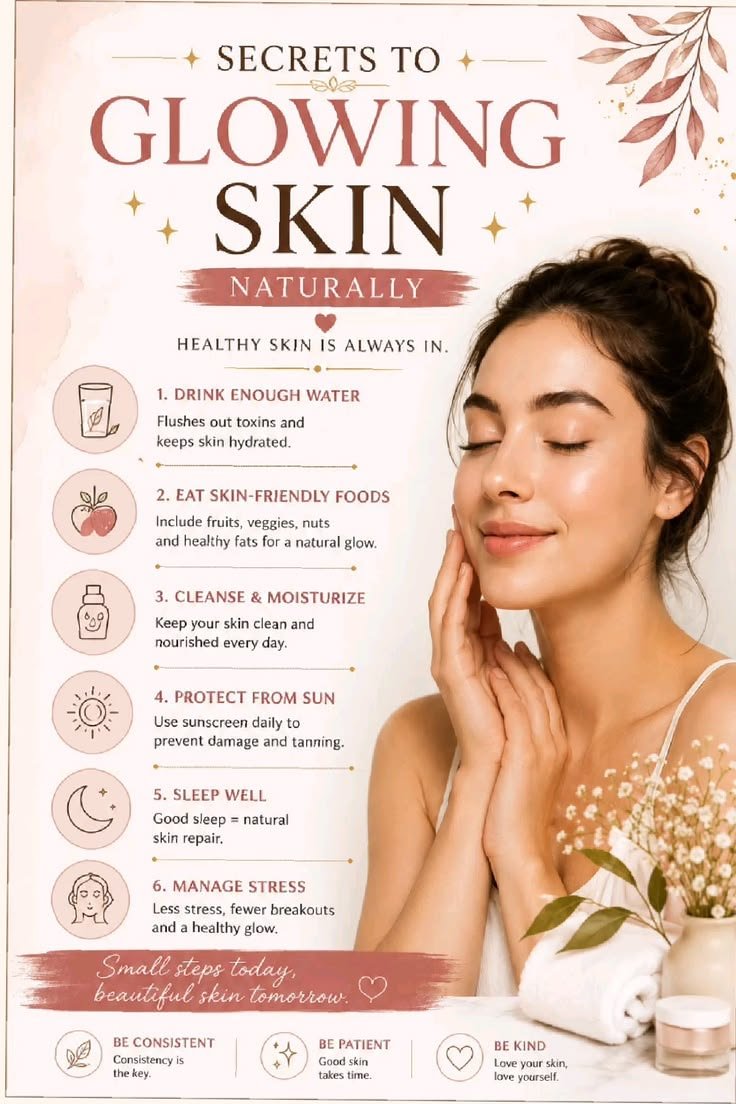
Skin is the body’s largest organ, and taking care of it is an important part of overall health and personal care.
Good skin health isn’t about having perfectly smooth or flawless skin. Skin naturally has pores, texture, marks, and other characteristics. The goal is to support your skin with simple, consistent habits.
What Is Skin Health?
Skin health refers to maintaining the skin’s normal protective function and keeping it comfortable and well cared for.
Your skin can be affected by many factors, including:
- Sun exposure
- Weather
- Age
- Genetics
- Lifestyle
- Skincare products
- Environment
Because everyone is different, there isn’t one routine that works for everyone.
1. Protect Your Skin From the Sun
Sun protection is one of the most important parts of skin care.
Regular exposure to ultraviolet (UV) radiation can contribute to sunburn and long-term skin damage.
Using a broad-spectrum sunscreen, seeking shade, and wearing protective clothing can help reduce exposure.
Follow the sunscreen’s instructions for application and reapplication.
2. Keep Your Skin Clean
Regular cleansing can help remove sweat, dirt, excess oil, makeup, and other substances from the skin.
Use a cleanser appropriate for your skin and avoid excessive scrubbing.
The goal is to clean the skin without unnecessarily irritating it.
3. Moisturize Your Skin
Moisturizers can help support the skin barrier and reduce feelings of dryness.
Different types of moisturizers are available for different skin types and preferences.
If your skin tends to be oily, you can still choose a lightweight moisturizer rather than automatically skipping moisturizer.
4. Stay Hydrated
Drinking enough fluids is important for overall health.
However, drinking more water isn’t a replacement for proper skincare or medical treatment. Think of hydration as one part of a broader healthy lifestyle.
5. Get Enough Sleep
Sleep plays an important role in general health and well-being.
Maintaining a regular sleep schedule can support your overall lifestyle and help you feel more rested.
6. Eat a Balanced Diet
Nutrition can contribute to overall health, including the health of your skin.
A balanced diet that includes a variety of foods can provide the nutrients your body needs.
There is no single “magic” food that can guarantee perfect skin.
7. Avoid Smoking
Smoking can negatively affect overall health and can also affect the skin.
Avoiding tobacco is an important part of maintaining a healthier lifestyle.
8. Choose Skincare Products Carefully
Not every product is suitable for every person.
When choosing skincare products, consider your skin type, individual needs, ingredients, and the product’s intended use.
Don’t assume that an expensive product will automatically be more effective.
9. Don’t Overdo Your Skincare Routine
Using too many products or active ingredients can sometimes irritate the skin.
A simple routine can be easier to maintain and can make it easier to identify which products work well for you.
10. Pay Attention to Changes in Your Skin
It’s useful to know what is normal for your own skin.
If you notice a persistent or unusual change, don’t rely only on online skincare advice. A dermatologist or other qualified healthcare professional can evaluate concerns and provide appropriate guidance.
Skin Health and Different Skin Types
Oily Skin
Oily skin produces more sebum and may appear shiny. Lightweight, appropriate products may be preferable for some people.
Dry Skin
Dry skin may feel tight, rough, or uncomfortable. Moisturizing products can help support the skin barrier.
Combination Skin
Combination skin can have both oily and dry areas, which may require different approaches for different parts of the face.
Sensitive Skin
Sensitive skin may react more easily to certain products or environmental conditions. Keeping the routine simple and introducing products gradually can be helpful.
Skin Health vs. Beauty Trends
Social media often promotes the idea of “perfect skin,” but real skin naturally has texture, pores, pigmentation, and other variations.
A healthy skincare routine should focus on supporting your skin rather than trying to achieve an unrealistic standard.
When to See a Dermatologist
Skincare products can help with everyday cosmetic care, but some skin concerns require professional evaluation.
Consider speaking with a dermatologist if you have persistent irritation, severe acne, unexplained changes, or another skin concern that doesn’t improve.
Final Thoughts
Good skin health starts with simple habits.
Protect your skin from the sun, cleanse gently, moisturize when needed, maintain a healthy lifestyle, and choose skincare products carefully.
You don’t need a complicated routine or perfect skin. The goal is to understand your skin and take consistent care of it over time.
Leave a Reply