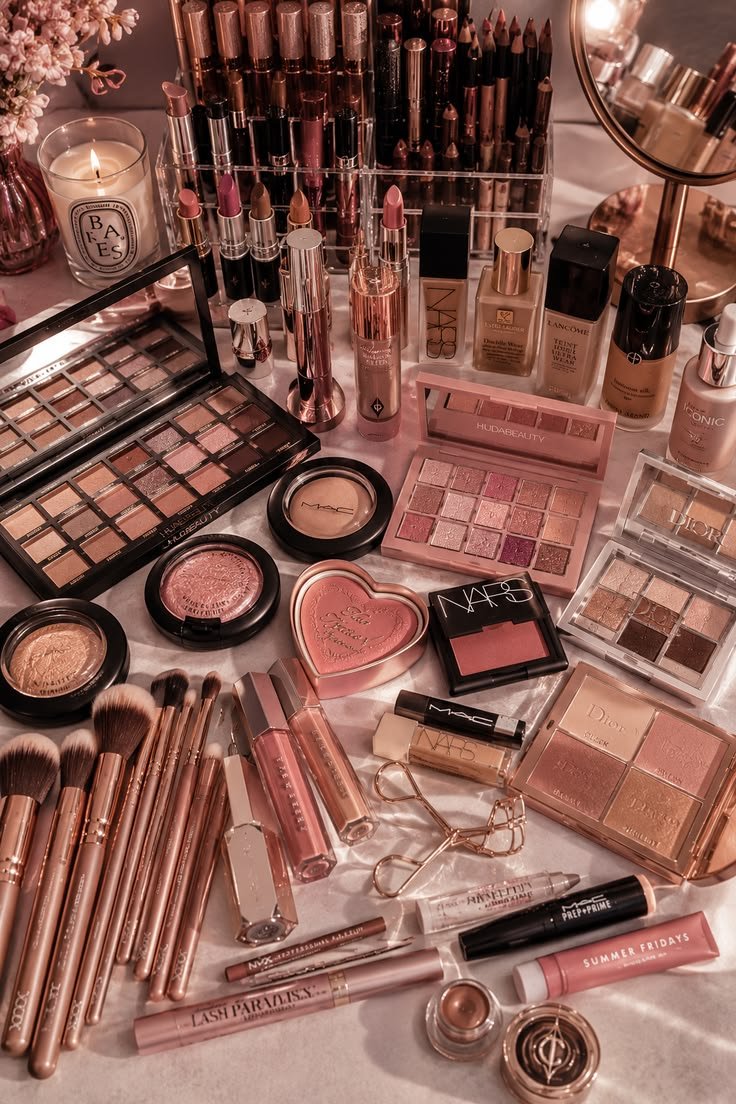
Choosing the right makeup products can feel overwhelming, especially when there are hundreds of options available. Foundations, concealers, blushes, mascaras, lip products, and eyeshadows all serve different purposes.
You don’t need every product available to create a great makeup routine. Understanding what each product does can help you build a simple collection based on your personal preferences.
What Are Makeup Products?
Makeup products are cosmetic products designed to enhance, define, or add color to different areas of the face.
They can be divided into several categories:
- Face makeup
- Eye makeup
- Lip makeup
- Makeup tools
- Setting products
Each category contains different formulas and finishes.
1. Foundation
Foundation is used to create a more even-looking complexion.
Common types include:
- Liquid foundation
- Cream foundation
- Powder foundation
- Stick foundation
When choosing foundation, consider the coverage, finish, and formula that feel most comfortable for you.
2. Concealer
Concealer provides targeted coverage and is often used on specific areas.
It can be used around:
- The eyes
- The nose
- Blemishes
- Areas where additional coverage is desired
A small amount is usually enough.
3. Setting Powder
Setting powder can help reduce shine and set certain complexion products.
It is available in:
- Loose powder
- Pressed powder
You don’t necessarily need to apply powder to your entire face.
4. Blush
Blush adds color to the cheeks.
Popular formulas include:
- Powder blush
- Cream blush
- Liquid blush
Choose the formula based on the finish and application method you prefer.
5. Bronzer
Bronzer is generally used to add warmth to the complexion.
It comes in powder, cream, and liquid formulas.
6. Highlighter
Highlighter adds a light-reflecting effect to selected areas.
It is commonly applied to areas such as:
- Cheekbones
- Brow bone
- Inner corners of the eyes
- Bridge of the nose
A small amount can be enough.
7. Eyeshadow
Eyeshadow is available in countless colors and finishes.
Common finishes include:
- Matte
- Shimmer
- Satin
- Metallic
Neutral eyeshadows can be particularly useful for beginners.
8. Eyeliner
Eyeliner defines the eyes and comes in several forms:
- Pencil
- Gel
- Liquid
- Felt-tip
Pencil eyeliner is often a simple option for beginners.
9. Mascara
Mascara is used to enhance the appearance of eyelashes.
Different formulas can focus on:
- Length
- Volume
- Definition
- Curl
Choose based on the effect you prefer.
10. Eyebrow Products
Brow products can help define and shape the appearance of eyebrows.
Common options include:
- Brow pencil
- Brow powder
- Brow gel
- Brow pomade
You can choose one product rather than using several.
11. Lip Balm
Lip balm helps keep lips feeling comfortable and can provide a simple finish.
Tinted lip balms can add a small amount of color while keeping the routine minimal.
12. Lip Gloss
Lip gloss provides a shiny finish and can be worn alone or over another lip product.
Glosses are available in clear and tinted versions.
13. Lipstick
Lipstick comes in many colors and finishes, including:
- Matte
- Satin
- Cream
- Glossy
The best shade is largely a matter of personal preference and the look you’re creating.
14. Lip Liner
Lip liner can help define the lips and create a more precise application.
It can also be worn alone or underneath lipstick and gloss.
15. Makeup Primer
Primer is applied before makeup and is designed to prepare the skin for certain makeup products.
Different primers can focus on different preferences, such as:
- Smoother-looking texture
- Hydration
- Reducing visible shine
- Helping makeup stay in place
Primer is optional and isn’t necessary for everyone.
16. Setting Spray
Setting spray is usually applied after makeup.
Depending on the formula, it may help makeup feel more comfortable and last longer.
Always follow the product’s directions.
Essential Makeup Products for Beginners
If you’re building your first makeup collection, you don’t need dozens of products.
A simple starter collection could include:
- Foundation or skin tint
- Concealer
- Blush
- Mascara
- Neutral eyeshadow
- Lip balm or gloss
You can add other products later as you learn what you enjoy using.
How to Choose Makeup Products
Before buying a product, consider:
Your Skin Type
Some formulas may feel better on dry skin, while others may be more comfortable for oily skin.
Your Preferred Finish
You may prefer:
- Matte
- Natural
- Satin
- Dewy
Your Makeup Style
Think about whether you usually prefer:
- Minimal makeup
- Natural-looking makeup
- Glam makeup
- Creative makeup
Your Budget
You don’t need expensive products to learn makeup. Focus on finding products that suit your needs and are comfortable to use.
Makeup Product Hygiene
Good makeup hygiene is important.
Remember to:
- Clean makeup brushes regularly.
- Avoid sharing eye makeup.
- Keep products properly closed.
- Follow storage instructions.
- Check product expiration information.
- Replace products when recommended.
If a product changes smell, texture, or appearance unexpectedly, it’s better not to use it.
Final Thoughts
There are countless makeup products available, but you don’t need all of them. Start with a few essentials, learn what each product does, and gradually build a collection that fits your personal style.
The right makeup collection is not necessarily the biggest one—it’s the one that contains products you actually enjoy and use.