
A good skincare routine doesn’t need to contain dozens of products. For many people, a simple and consistent routine can be easier to maintain than a complicated one.
Whether you’re completely new to skincare or looking to simplify your current routine, understanding the basic steps can help you make more informed choices.
What Is a Skincare Routine?
A skincare routine is a series of steps you regularly follow to care for your skin.
A basic routine usually focuses on three main things:
- Cleansing
- Moisturizing
- Sun protection
Additional products can be included depending on your individual needs.
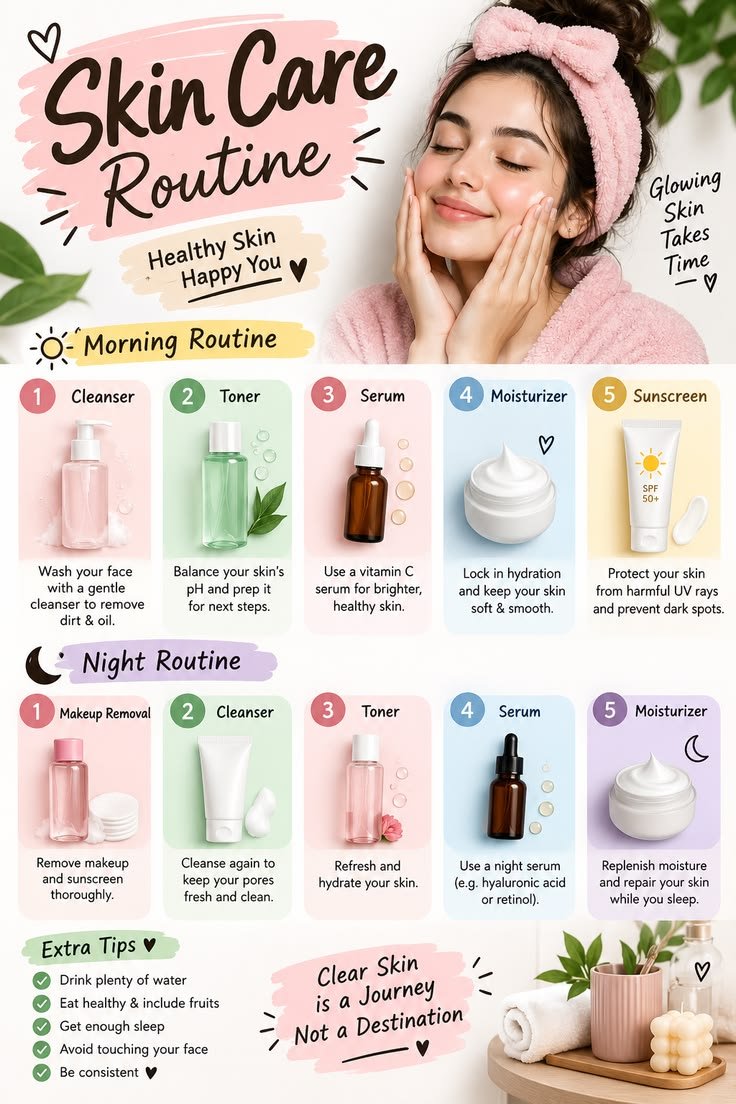
Morning Skincare Routine
Your morning routine should be simple and practical.
Step 1: Cleanse
Start by cleansing your face if cleansing is appropriate for your skin.
A gentle cleanser can help remove oil, sweat, and residue from the skin.
Avoid aggressive scrubbing, particularly if your skin is sensitive.
Step 2: Apply Treatment Products
If you use a serum or another treatment product, apply it according to its instructions.
You don’t need multiple treatment products just because they are popular online.
Step 3: Moisturize
Apply a moisturizer that suits your skin.
Moisturizing helps support the skin barrier and can help your skin feel comfortable throughout the day.
Step 4: Apply Sunscreen
Sunscreen is an important final step in a daytime skincare routine.
Choose a broad-spectrum sunscreen and follow the manufacturer’s instructions for application and reapplication.
Evening Skincare Routine
Your evening routine can focus on cleansing and caring for your skin after the day.
Step 1: Remove Makeup
If you wear makeup, remove it before cleansing.
Use a suitable makeup remover or cleansing product and avoid rubbing the skin aggressively.
Step 2: Cleanse Your Skin
Cleanse your face using a product appropriate for your skin.
The goal is to clean the skin without leaving it feeling excessively dry or uncomfortable.
Step 3: Apply Your Skincare Treatments
If you use products such as serums or other treatments, apply them according to their specific directions.
When introducing a new active ingredient, adding one product at a time can make it easier to monitor how your skin responds.
Step 4: Moisturize
Finish your evening routine with a moisturizer if it suits your skin and routine.
How Often Should You Follow a Skincare Routine?
Consistency is generally more useful than constantly changing products.
A basic routine can be followed daily, while some treatments or exfoliating products may be intended for less frequent use.
Always follow the instructions on the specific product.
Skincare Routine for Different Skin Types
Oily Skin
If your skin tends to produce excess oil, you may prefer lightweight, non-comedogenic products.
Avoid assuming that oily skin doesn’t need moisturizer.
Dry Skin
If your skin feels dry or tight, you may prefer richer moisturizing products designed to support the skin barrier.
Combination Skin
Combination skin can have both oily and dry areas. You may need to adjust the products you use according to different areas of your face.
Sensitive Skin
If your skin is easily irritated, keep your routine simple and introduce new products carefully.
Avoid using multiple strong active ingredients at the same time without understanding their effects.
Common Skincare Routine Mistakes
Using Too Many Products
A complicated routine isn’t necessarily more effective.
Skipping Sunscreen
Daily sun protection is an important part of daytime skincare.
Changing Products Too Frequently
Constantly switching products can make it difficult to know what works for you.
Over-Exfoliating
Exfoliation can be useful for some people, but excessive exfoliation can irritate the skin.
Follow the product instructions and pay attention to how your skin responds.
How to Build a Beginner Skincare Routine
If you’re starting from zero, don’t buy ten products immediately.
Start with:
Morning
- Cleanser, if needed
- Moisturizer
- Broad-spectrum sunscreen
Evening
- Makeup remover, if needed
- Cleanser
- Moisturizer
Once you’ve established this basic routine, you can consider adding specific products based on your individual needs.
When to Get Professional Advice
Skincare products are not a replacement for medical treatment.
If you experience persistent irritation, severe acne, unusual skin changes, or another ongoing concern, consider consulting a qualified dermatologist or healthcare professional.
Final Thoughts
The best skincare routine is one that you can consistently follow and that suits your individual needs.
Keep the basics simple, introduce new products gradually, protect your skin from the sun, and avoid feeling pressured to follow every skincare trend you see online.
A thoughtful routine can be much more useful than a bathroom full of products.