
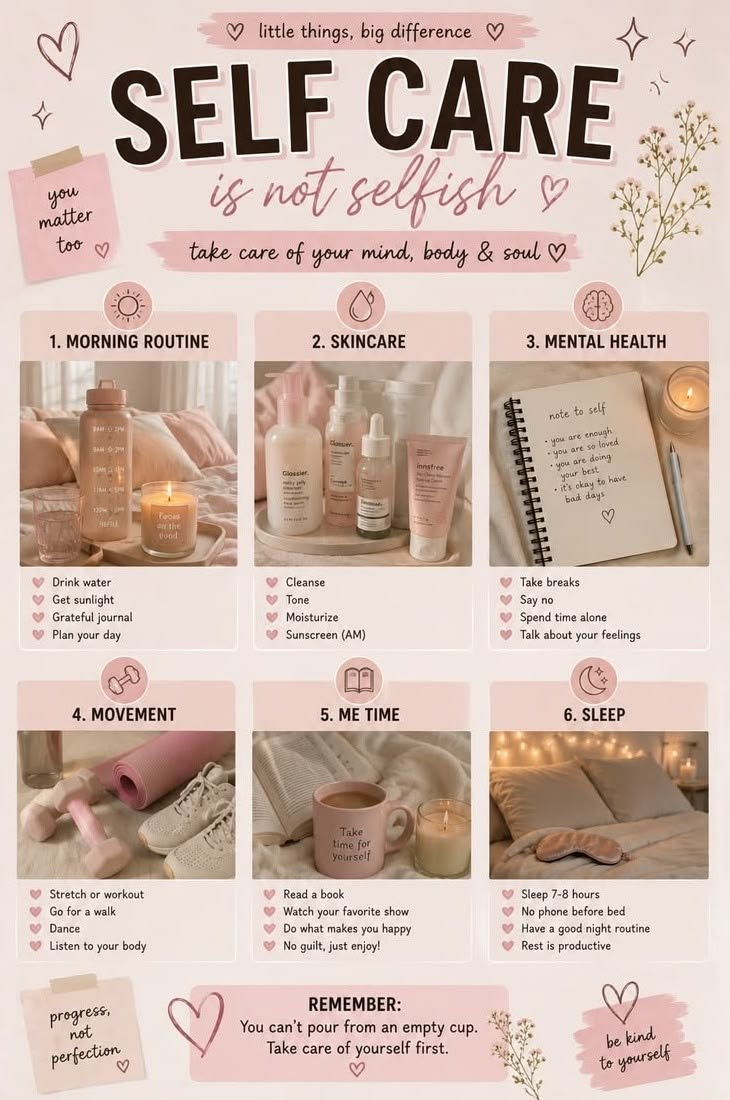
Self care is about taking time to support your physical, emotional, and mental well-being. It does not have to involve expensive products, complicated routines, or large lifestyle changes.
Simple habits such as getting enough rest, maintaining personal hygiene, spending time on activities you enjoy, and taking breaks can all be part of a healthy self-care routine.
What Is Self Care?
Self care refers to the everyday actions you take to look after yourself and maintain your well-being.
Self care can include:
- Personal hygiene
- Skincare
- Hair care
- Sleep and rest
- Physical activity
- Relaxation
- Hobbies
- Spending time with people you care about
- Taking healthy breaks
There is no single self-care routine that works for everyone.
Why Is Self Care Important?
Daily responsibilities can sometimes leave little time for yourself. Making space for basic self-care can help you maintain healthier routines and avoid constantly ignoring your own needs.
Self care can help you:
- Maintain good personal hygiene
- Create healthier daily routines
- Make time for rest
- Reduce everyday stress
- Enjoy your hobbies
- Stay connected with others
- Pay more attention to your overall well-being
Self care is not about being perfect. It is about regularly making time for basic needs.
1. Get Enough Sleep
Sleep is an important part of overall well-being.
A consistent sleep schedule can make it easier to maintain a healthy routine.
Simple habits that may support better sleep include:
- Going to bed at a relatively consistent time
- Keeping your bedroom comfortable
- Reducing distractions before bed
- Creating a relaxing nighttime routine
2. Take Care of Your Personal Hygiene
Personal hygiene is one of the simplest forms of self care.
Regular habits can include:
- Showering or bathing
- Washing your hands
- Brushing your teeth
- Taking care of your hair
- Changing clothes regularly
- Keeping your personal environment clean
These small habits can contribute to comfort and overall health.
3. Create a Simple Skincare Routine
Skincare can be a relaxing part of self care.
A basic routine might include:
Morning:
- Gentle cleanser
- Moisturizer
- Sunscreen
Evening:
- Gentle cleanser
- Moisturizer
You can add other products when they serve a specific purpose and are appropriate for your skin.
4. Take Breaks
Taking regular breaks can be useful when studying, working, or spending long periods on a screen.
A short break might involve:
- Walking around
- Stretching
- Getting some fresh air
- Drinking water
- Listening to music
- Simply stepping away from your screen
A break does not have to be long to give you some time to reset.
5. Make Time for Hobbies
Hobbies are an important part of personal well-being.
You might enjoy:
- Reading
- Drawing
- Photography
- Cooking
- Writing
- Gaming
- Learning a new skill
- Listening to music
- Gardening
The goal is not productivity. Sometimes doing something simply because you enjoy it is enough.
6. Stay Connected
Self care does not always mean spending time alone.
Talking with friends, family members, teachers, or other trusted people can be an important part of maintaining emotional well-being.
Even a simple conversation can help you feel connected.
7. Stay Physically Active
Movement can be part of a healthy self-care routine.
You can choose activities that you enjoy, such as:
- Walking
- Cycling
- Dancing
- Playing a sport
- Stretching
- Outdoor activities
The goal is to support your health and enjoy movement rather than focusing on changing your appearance.
8. Take Care of Your Environment
Your surroundings can affect how comfortable you feel.
Simple actions such as:
- Cleaning your room
- Organizing your desk
- Changing your bedsheets
- Removing unnecessary clutter
- Creating a comfortable study space
can make your daily environment more pleasant.
9. Spend Time Away From Screens
Phones and computers are useful, but taking occasional breaks from screens can be refreshing.
You could use that time to:
- Read a book
- Go for a walk
- Talk with someone
- Work on a hobby
- Listen to music
- Spend time outdoors
Even a short period away from screens can create a useful change of pace.
10. Learn to Recognize When You Need a Break
One important part of self care is recognizing when you need to slow down.
If you feel overwhelmed by school, work, responsibilities, or everyday situations, consider talking to someone you trust and giving yourself appropriate time to rest.
Asking for support is also a form of taking care of yourself.
Simple Self-Care Routine
You do not need hours every day for self care.
A simple routine could look like:
Morning
- Wake up
- Practice basic hygiene
- Drink water
- Have breakfast
- Prepare for the day
During the Day
- Take short breaks
- Eat regular meals
- Move around
- Stay connected with others
Evening
- Shower or wash up
- Complete your skincare routine
- Spend some time on a relaxing activity
- Prepare for sleep
- Get enough rest
Self Care on a Budget
Self care does not have to be expensive.
Free or low-cost ideas include:
- Taking a walk
- Reading
- Journaling
- Listening to music
- Cleaning your room
- Stretching
- Spending time with friends or family
- Learning something new
- Spending time outdoors
You do not need expensive beauty products or wellness subscriptions to practice self care.
Common Self-Care Mistakes
Some common misconceptions about self care include:
- Thinking self care must be expensive
- Buying products simply because they are trending
- Treating self care as a reward rather than a regular habit
- Trying to follow someone else’s routine exactly
- Ignoring sleep and basic needs
- Believing self care always means relaxation
Sometimes self care is simply doing something important for your well-being, even when it is not particularly exciting.
Final Thoughts
Self care is not about creating a perfect lifestyle. It is about building simple habits that support your everyday well-being.
Getting enough rest, maintaining personal hygiene, taking breaks, enjoying hobbies, staying connected, and making time for yourself can all contribute to a balanced routine.
Start small, choose habits that fit your life, and remember that taking care of yourself is something you can practice every day.