
Skin naturally changes over time. Changes in texture, moisture, and appearance are a normal part of life, and there is no single way that skin is supposed to look.
A good skincare routine can focus on keeping the skin comfortable, protected, and healthy rather than trying to stop the natural aging process.
What Is Anti-Aging Skincare?
Anti-aging skincare generally refers to products and habits designed to support healthy-looking skin as it changes over time.
Common goals include:
- Supporting skin hydration
- Protecting the skin from the sun
- Maintaining a healthy skin barrier
- Improving the appearance of uneven texture
- Keeping a consistent skincare routine
The term “anti-aging” is widely used in the beauty industry, but healthy skin does not need to look a certain way.
Why Does Skin Change Over Time?
Skin naturally changes for many reasons.
Some factors include:
- Natural biological aging
- Sun exposure
- Environmental conditions
- Genetics
- Lifestyle factors
- Changes in skin hydration
These changes are normal and can happen differently from one person to another.
1. Sunscreen Is an Important Step
Sun protection is one of the most important parts of a basic skincare routine.
Regular exposure to ultraviolet (UV) radiation can contribute to changes in the skin over time. Using sunscreen and other sun-protection habits can help protect the skin from excessive UV exposure.
When spending time outdoors, consider:
- Using broad-spectrum sunscreen
- Reapplying according to the product instructions
- Wearing protective clothing
- Seeking shade when appropriate
- Avoiding unnecessary prolonged sun exposure
2. Keep Your Skin Moisturized
Moisturizers help support the skin’s moisture barrier and can make the skin feel more comfortable and hydrated.
A simple moisturizer can be useful for many different skin types.
Look for a texture that feels comfortable and works well with your skin rather than choosing a product simply because it is marketed as “anti-aging.”
3. Use a Gentle Cleanser
Cleansing helps remove dirt, sweat, excess oil, and other substances from the skin.
A gentle cleanser can help clean the skin without unnecessarily disrupting its natural barrier.
Avoid assuming that a cleanser needs to leave your skin feeling extremely tight or dry to be effective.
4. Keep Your Skincare Routine Simple
A complicated skincare routine is not always better.
A simple routine can include:
Morning:
- Gentle cleanser
- Moisturizer
- Sunscreen
Evening:
- Gentle cleanser
- Moisturizer
Additional products can be considered when there is a specific skincare concern and they are appropriate for the individual.
5. Pay Attention to Your Skin Barrier
The skin barrier helps protect the skin and maintain its moisture.
Using too many products or frequently changing your routine can sometimes cause irritation.
Signs that your routine may be too harsh can include:
- Dryness
- Stinging
- Redness
- Increased sensitivity
- Uncomfortable tightness
If irritation continues, simplifying your routine may help, and persistent skin problems can be discussed with a qualified healthcare professional.
6. Choose Products Based on Your Skin Needs
There is no universal anti-aging product that works perfectly for everyone.
Instead, consider your individual skin needs.
For example:
- Dry skin may prefer richer moisturizers.
- Oily skin may prefer lightweight formulas.
- Sensitive skin may benefit from simple, gentle products.
- Combination skin may require different textures for different areas.
Understanding your skin can be more useful than following every beauty trend.
Common Anti-Aging Skincare Ingredients
Many skincare products contain ingredients marketed for supporting healthy-looking skin.
Examples include:
- Hyaluronic acid
- Vitamin C
- Niacinamide
- Peptides
- Ceramides
Different ingredients have different purposes, and product formulations vary.
Always follow the product instructions and introduce new products carefully, especially if your skin is sensitive.
What About “Natural” Anti-Aging Products?
Natural does not automatically mean better or safer.
Some DIY skincare trends recommend ingredients that can irritate the skin. Using household ingredients directly on the face is not always a good idea.
It is generally better to use products formulated specifically for skincare and to follow their instructions.
Healthy Habits and Skin
Skincare is only one part of overall skin health.
General healthy habits can also support your wellbeing, including:
- Getting enough sleep
- Eating a varied and balanced diet
- Staying hydrated
- Protecting your skin from excessive sun exposure
- Keeping a consistent hygiene routine
- Managing stress in healthy ways
You do not need extreme routines or restrictive habits to care for your skin.
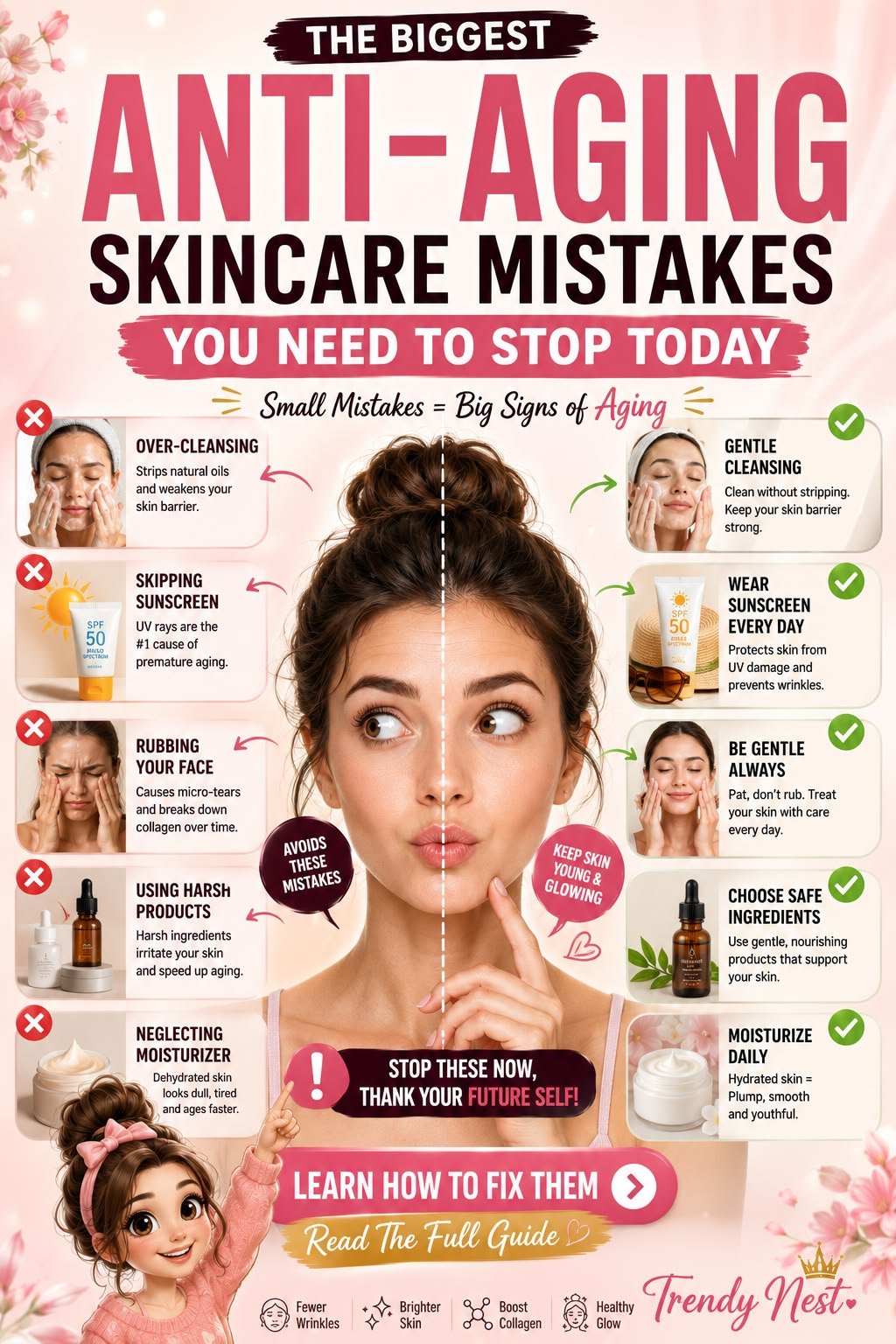
Common Anti-Aging Skincare Mistakes
Some common mistakes include:
- Using too many products at once
- Applying excessive amounts of skincare products
- Skipping sun protection
- Following every viral skincare trend
- Using harsh DIY ingredients
- Expecting immediate results
- Comparing your skin with edited images online
Healthy skin can look different from person to person.
Final Thoughts
Anti-aging skincare is best understood as long-term skin care rather than an attempt to stop natural aging.
A consistent routine based on gentle cleansing, moisturizing, and sun protection can provide a simple foundation for taking care of your skin.
Most importantly, skin naturally changes throughout life. Good skincare should support skin health and comfort rather than create pressure to look a certain way.