
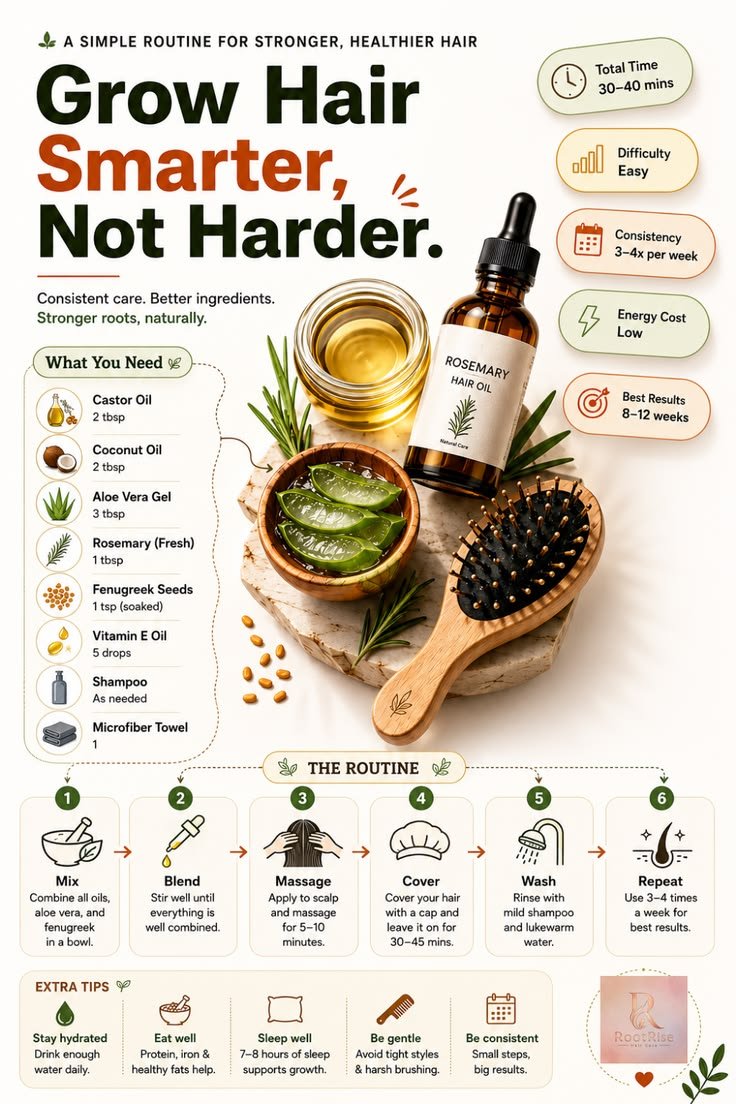
Hair growth is a natural biological process influenced by genetics, age, hormones, nutrition, and overall health. While many products claim to make hair grow faster, there is no single routine that guarantees rapid hair growth.
Understanding how hair grows and taking good care of your scalp and hair can help you maintain healthy-looking hair over time.
What Is Hair Growth?
Hair grows from follicles located in the skin. Each hair goes through a natural growth cycle with different phases.
The main phases are:
- Anagen: The active growth phase
- Catagen: A short transition phase
- Telogen: A resting phase
- Exogen: The shedding phase
These phases don’t happen at exactly the same time for every hair, which is why normal daily shedding occurs.
How Fast Does Hair Grow?
Hair growth varies from person to person.
Genetics, age, hormones, overall health, and other factors can influence the rate of growth.
Instead of focusing on a specific number, it can be more useful to focus on maintaining healthy hair and minimizing unnecessary damage.
Factors That Affect Hair Growth
Genetics
Genetics play an important role in hair characteristics, including growth patterns, thickness, and the length a person can naturally maintain.
Nutrition
Hair requires nutrients to grow normally.
A balanced diet containing a variety of foods can support overall health and normal hair growth.
Important nutrients include:
- Protein
- Iron
- Zinc
- Vitamin D
- B vitamins
However, taking supplements without a demonstrated need isn’t automatically beneficial.
Hormones
Hormonal changes can influence the hair growth cycle.
Significant changes in hair growth or shedding can sometimes be associated with underlying health conditions.
Stress and General Health
Periods of significant physical or emotional stress can sometimes affect the hair cycle.
Getting adequate rest, eating a balanced diet, and maintaining general healthy habits can support overall well-being.
How to Support Healthy Hair Growth
1. Keep Your Scalp Clean
Regular cleansing helps remove excess oil, sweat, and product buildup.
Choose a shampoo that feels comfortable for your scalp and suits your hair type.
2. Handle Hair Gently
Avoid aggressive brushing, pulling, or repeated tight hairstyles.
Gentle handling can help reduce unnecessary breakage.
3. Limit Excessive Heat
Frequent high-heat styling can damage the hair shaft.
If you use heat tools, follow the product’s instructions and use appropriate heat protection.
4. Protect Hair From Chemical Damage
Frequent bleaching, relaxing, perming, or other chemical treatments can weaken hair.
Give your hair appropriate recovery time between treatments.
5. Eat a Balanced Diet
Include a variety of nutrient-rich foods such as:
- Eggs
- Fish
- Beans
- Lentils
- Vegetables
- Fruits
- Whole grains
- Nuts and seeds
A varied diet provides many nutrients needed for normal body functions.
Can Hair Products Make Hair Grow Faster?
Many products are marketed specifically for hair growth.
However, a cosmetic product cannot necessarily change the biological rate at which your follicles produce hair.
Products such as conditioners, leave-in treatments, and oils may improve the feel or appearance of hair and help reduce breakage, but that is different from increasing the underlying growth rate.
Does Cutting Hair Make It Grow Faster?
No.
Cutting the ends of your hair does not change how quickly hair grows from the follicles.
However, regular trimming can remove damaged ends and help a hairstyle look more maintained.
What About Hair Oils?
Hair oils can help condition the hair and reduce the feeling of dryness for some people.
Examples include:
- Coconut oil
- Argan oil
- Jojoba oil
However, oils are not guaranteed to increase the biological rate of hair growth.
Use them according to the product instructions and stop if irritation occurs.
Hair Growth and Hair Breakage
Sometimes hair may appear not to be growing because the ends are breaking at a similar rate to new growth.
Reducing breakage can therefore help you retain more of the length you naturally grow.
Helpful habits include:
- Gentle detangling
- Less excessive heat
- Avoiding very tight hairstyles
- Using conditioner
- Protecting hair during styling
Common Hair Growth Myths
Myth: Cutting Hair Makes It Grow Faster
Hair grows from the follicles, not from the ends.
Myth: More Products Always Mean Faster Growth
Using more products doesn’t necessarily improve hair growth.
Myth: One Ingredient Works for Everyone
Hair and scalp needs vary significantly between people.
Myth: Supplements Are Always the Answer
Supplements are useful when there is a nutritional need, but taking unnecessary or excessive amounts can cause problems.
When to Seek Professional Advice
If you notice sudden or significant hair loss, unusual changes in your hair growth, persistent scalp irritation, or other concerning symptoms, consider speaking with a dermatologist or qualified healthcare professional.
They can help determine whether there is an underlying cause and whether treatment is appropriate.
Final Thoughts
Hair growth is influenced by many factors, and there is no universal shortcut for making hair grow rapidly.
A balanced diet, gentle hair care, scalp care, and reduced damage can help you maintain healthy-looking hair and retain the length you naturally grow.
Focus on consistent care rather than quick fixes or unrealistic promises.